Unofficial translation of a guide written for Polish learners; the Polish original is the reference version.
In the age of reliable traffic lights, the sight of a police officer directing traffic is a rarity - we associate it above all with trips to cemeteries in November. Practice shows that a great many drivers have no idea whatsoever how to behave when a police officer takes control of the traffic!
Remember!!!
The orders and signals given by persons
directing traffic always take precedence over light signals and road signs! They have absolute
priority.
Consequences
Knowing the signals given by a person directing
traffic matters not only for our safety on the road. Ignoring or
misreading the signals given by a police officer can mean a heavy fine!
THE RULES
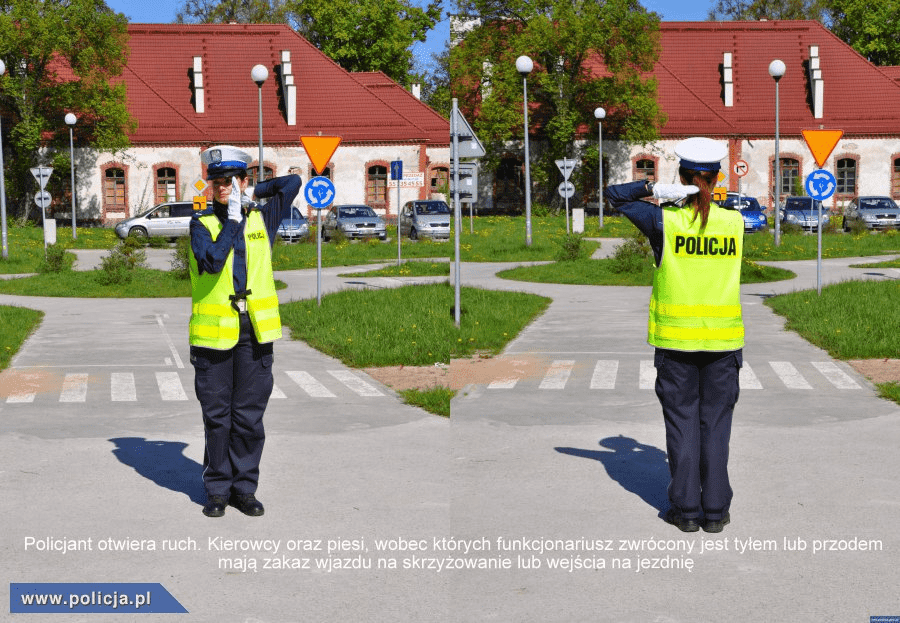
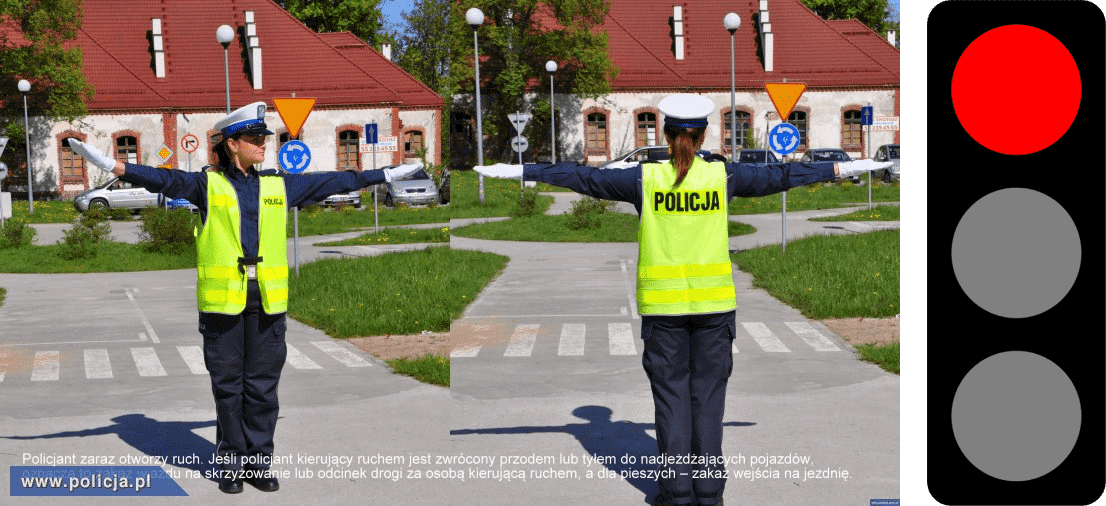
1. Do not enter (red light)
The equivalent of the red
signal. Drivers and pedestrians whom the officer is facing with his back or his front must not
drive or step onto the intersection.
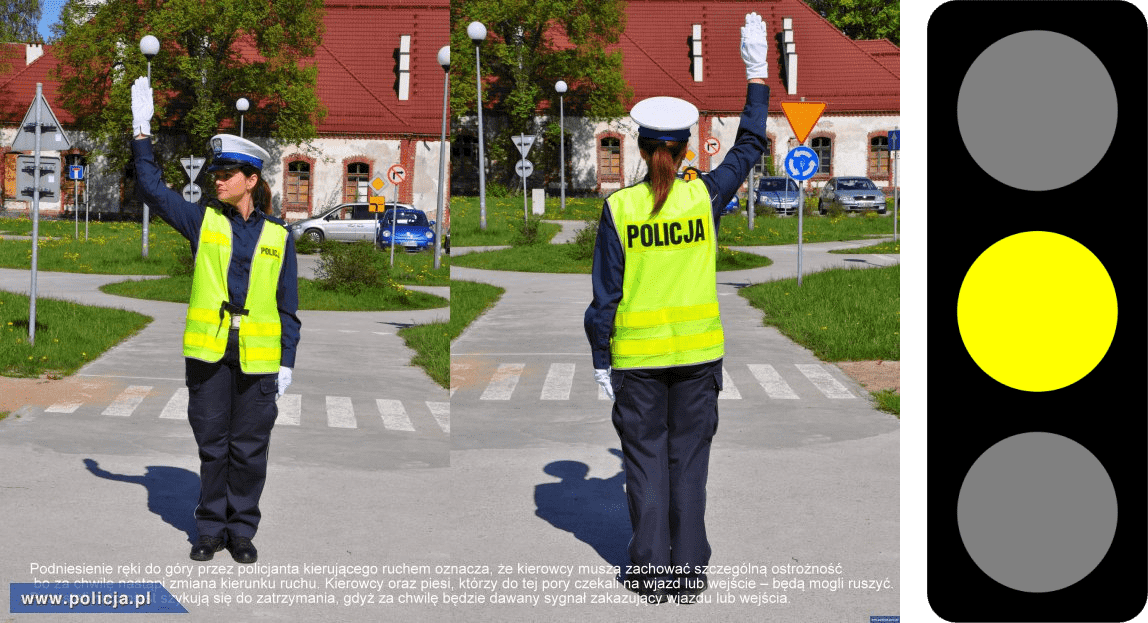
2. Change of the direction of traffic (yellow light)
The equivalent of the
yellow signal. A police officer with one arm raised is a sign to drivers that they should exercise
particular care – the direction of traffic is about to change. Entering the intersection is
prohibited.
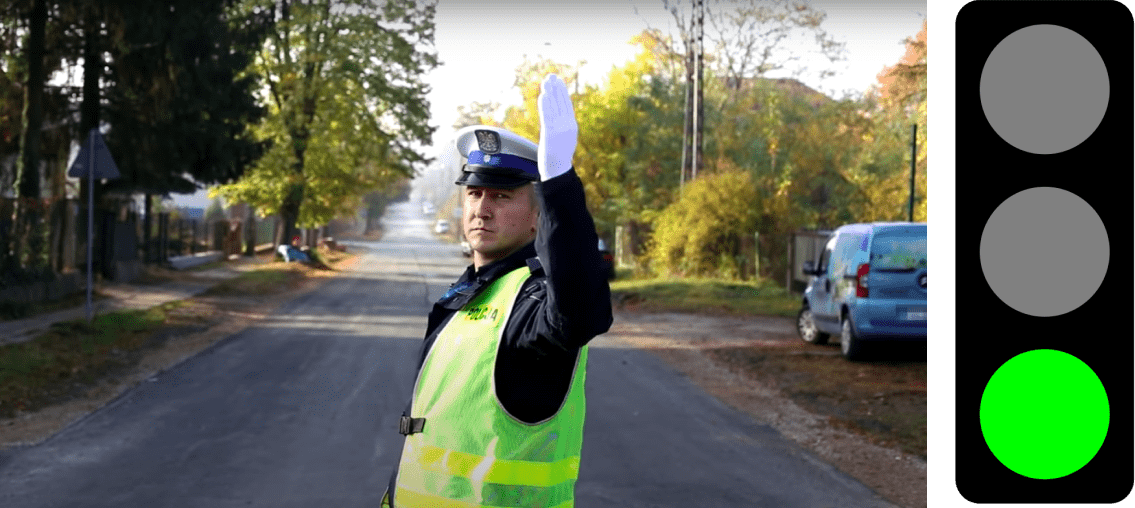
3. Traffic open
A police officer standing with his right
or left side towards the driver is the equivalent of the green signal. Traffic moves from the right and the left.
4. Order to leave the intersection
Traffic is open for those
turning left and going straight ahead from the officer's left-hand side. Those coming from the other
side of the officer are obliged to stop.
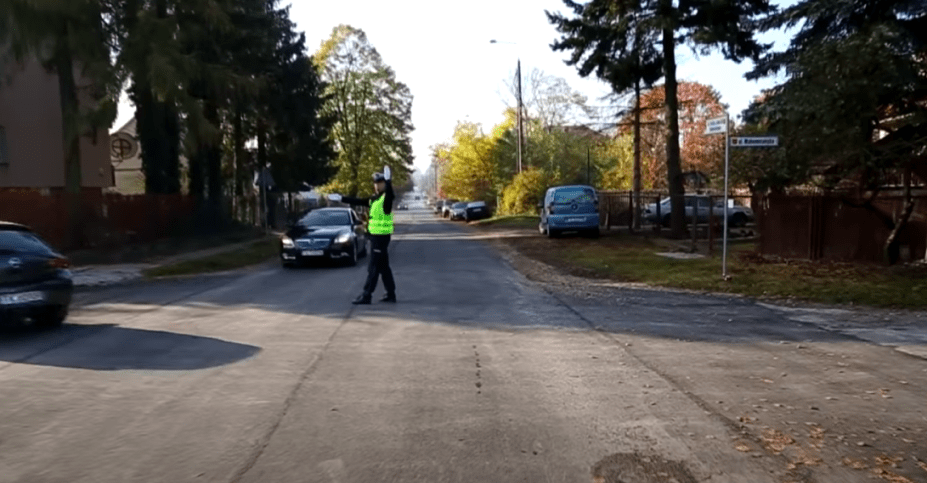
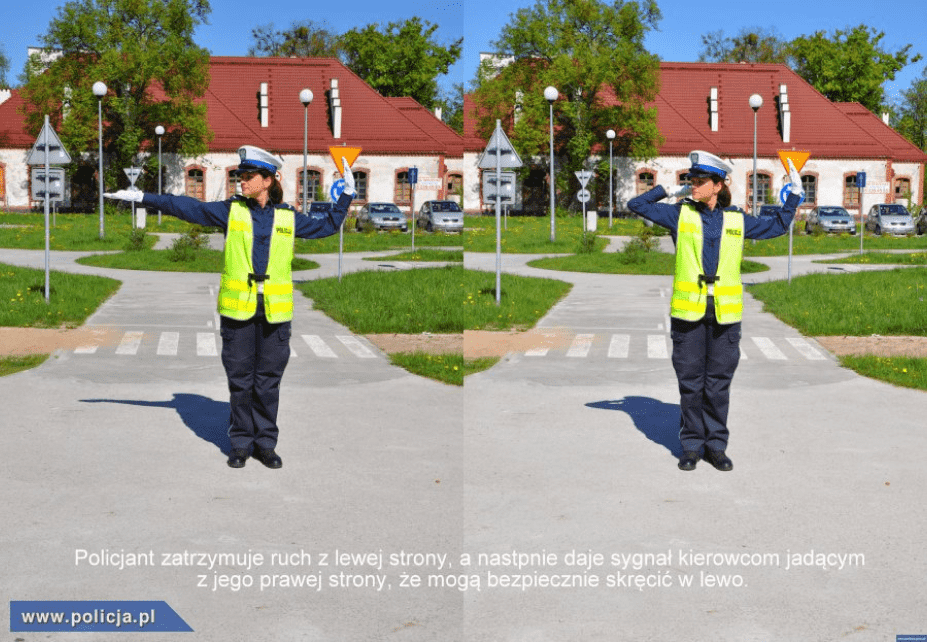
5. Order to leave the intersection
The police officer at the
intersection allows drivers to carry out a safe turning manoeuvre – this applies, however, to
drivers coming from his right-hand side who want to turn left.
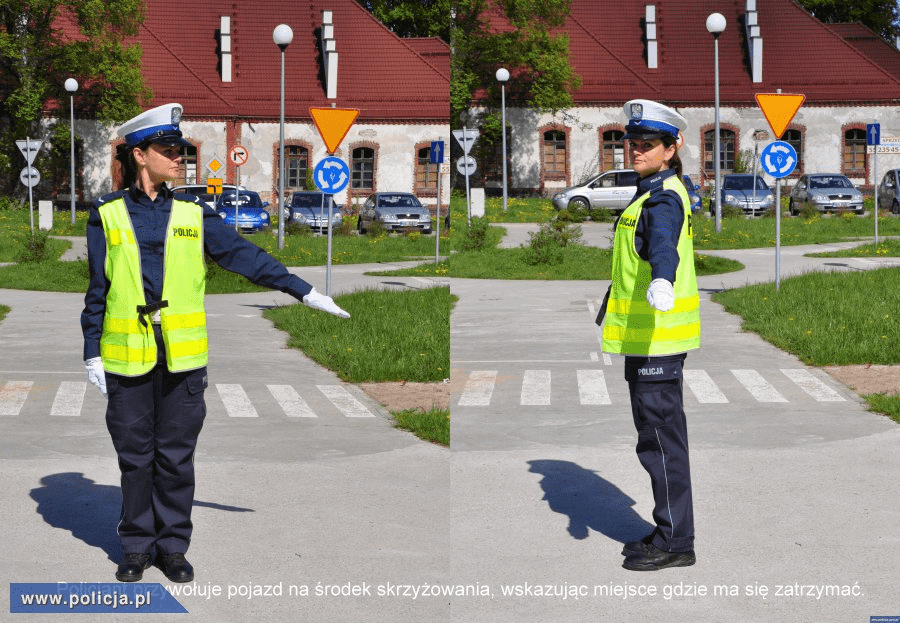
6. Summoning
This is a less common signal. The police officer
indicates to the driver the place at the intersection where he is to stop.
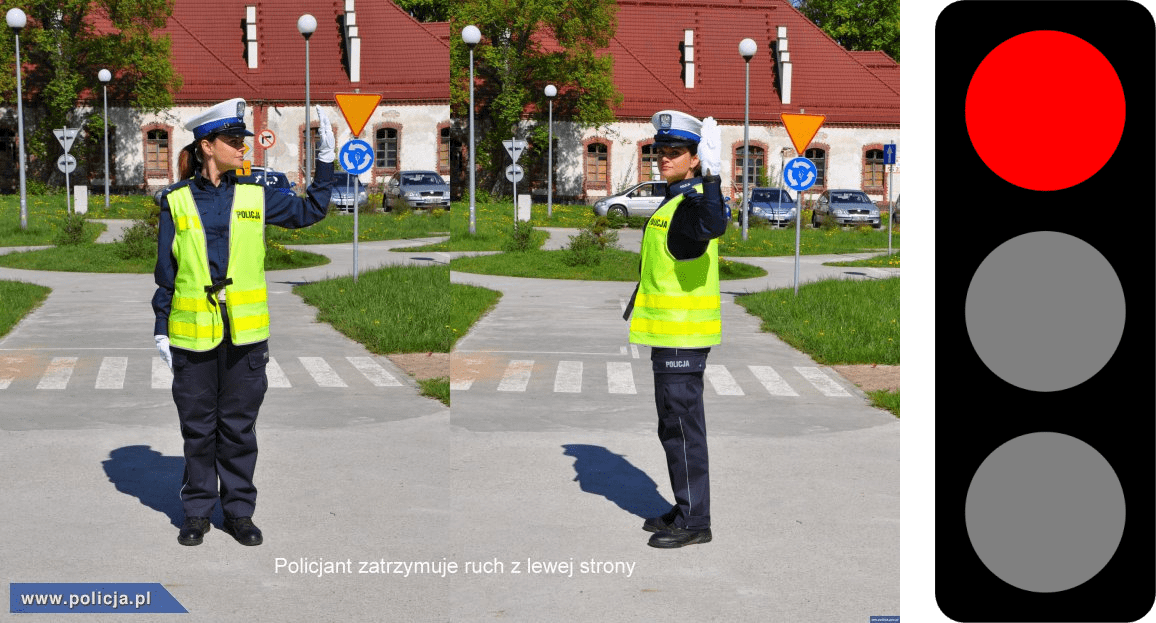
7. Stopping the traffic
This position of the police officer - with the inner
side of the palm turned towards the driver - calls on the driver to stop.
8. Opening the traffic
The signals made by the police officer, as
in the photograph below, mean that the traffic is open. Drivers and pedestrians whom the
police officer is facing with his front or his back may not move.