
Unofficial translation for learning purposes. Only the Polish text published in Dziennik Ustaw is legally binding — open the Polish original. Source: Regulation of 31 July 2002 on road signs and signals (Dz. U. 2019 poz. 2310, as amended).
§ 15.
1. Prohibitory signs apply on the road on which they are placed, unless specific provisions provide otherwise.
2. A prohibition expressed by a prohibitory sign applies from the place where the sign is placed, unless specific provisions provide otherwise.
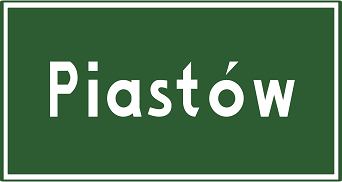
3. A prohibitory sign placed beneath sign E-17a means that the prohibition applies throughout the locality, except for the section of road on which it has been modified or cancelled by another sign.


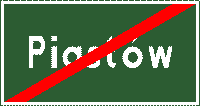
4. A prohibitory sign placed beneath sign D-42 means that the prohibition applies up to sign D-43 or E-18a, except for the section of road on which it has been modified or cancelled by another sign.

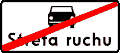
4a. A prohibitory sign placed beneath sign D-52 "traffic zone" means that the prohibition applies up to sign D-53 "end of traffic zone", except for the section of road on which it has been modified or cancelled by another sign.
5. A plate placed beneath a prohibitory sign indicates:
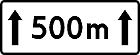
1) T-20 - the length of the section of carriageway on which the prohibition applies;
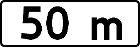
2) T-21 - the distance of the sign from the place from which or at which the prohibition applies.
6. An inscription placed on a prohibitory sign or on a plate specifying days or a period of the day means that the prohibition applies during that time.
7. Two or three symbols of the signs specified in § 18 and 19 placed on a single sign face have the same meaning as the individual signs.
§ 16.

1. Sign B-1 "no traffic in both directions" means a prohibition on the road of the movement of vehicles, columns of pedestrians, riders and drovers; the sign may be placed on the carriageway.
2. A plate with the inscription "Does not apply to" placed beneath sign B-1, together with the symbol of a vehicle or an expression specifying a vehicle, indicates that the prohibition does not apply to the vehicle specified on the plate.
§ 17.

1. Sign B-2 "no entry" means a prohibition on vehicles entering the road or carriageway from the side on which it is placed; the prohibition also applies to columns of pedestrians, riders and drovers.
2. A plate with the inscription "Does not apply to" placed beneath sign B-2, together with the symbol of a vehicle or an expression specifying a vehicle, indicates that the prohibition does not apply to the vehicle specified on the plate.
§ 18.
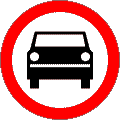
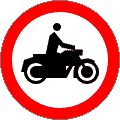
1. Sign B-3 "no entry for motor vehicles, except single-track motorcycles" means a prohibition on the movement of motor vehicles; the prohibition does not apply to single-track motorcycles.
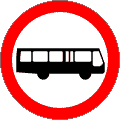
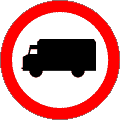
1) lorries with a maximum permissible weight exceeding 3.5 t;
2) road tractors;
3) special-purpose vehicles and vehicles used for special purposes with a maximum permissible weight exceeding 3.5 t;
4) agricultural tractors;
5) slow-moving vehicles.
5. A weight given on sign B-5 or on a plate placed beneath it means that the prohibition applies to a vehicle (combination of vehicles) whose maximum permissible weight exceeds the weight given on the sign or on the plate.
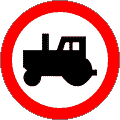
6. Sign B-6 "no entry for agricultural tractors" means a prohibition on the movement of agricultural tractors and slow-moving vehicles.
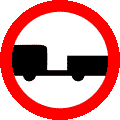
7. Sign B-7 "no entry for motor vehicles with a trailer" means a prohibition on the movement of motor vehicles with a trailer (trailers); the prohibition does not apply to vehicles with a single-axle trailer or a semi-trailer.
8. A weight given on sign B-7 or on a plate placed beneath it applies to the maximum permissible weight of the trailer and, where two trailers are being towed, to the sum of their weights.
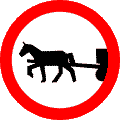
9. Sign B-8 "no entry for animal-drawn vehicles" means a prohibition on the movement of animal-drawn vehicles and of riders and drovers.
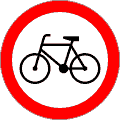
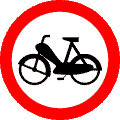
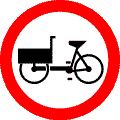
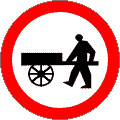
§ 19.
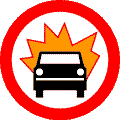
1. Sign B-13 "no entry for vehicles carrying explosive or flammable goods" means a prohibition on the movement of vehicles carrying dangerous goods of classes 1, 3, 4.1, 4.2, 4.3, 5.1, 5.2 or flammable gases of class 2, as specified in the provisions on the carriage of dangerous goods by road, in quantities for which the vehicle must be marked with orange warning plates.
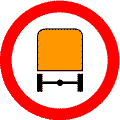
2. Sign B-13a "no entry for vehicles carrying dangerous goods" means a prohibition on the movement of vehicles carrying dangerous goods, as specified in the provisions on the carriage of dangerous goods by road, in quantities for which the vehicle must be marked with orange warning plates. A plate T-31 placed beneath the sign bearing the letter B, C, D or E denoting the tunnel category, or a plate with an appropriate inscription, indicates that the prohibition applies only to specified classes or groups of dangerous goods or to a specified manner of carrying those goods.

3. Sign B-14 "no entry for vehicles carrying goods liable to contaminate water" means a prohibition on the movement of vehicles carrying dangerous goods of classes 3, 4.3, 6.1, 6.2, 8, toxic gases or corrosive gases of class 2, or environmentally hazardous goods of class 9, as specified in the provisions on the carriage of dangerous goods by road, in quantities for which the vehicle must be marked with orange warning plates.
§ 20.
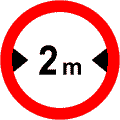
1. Sign B-15 "no entry for vehicles wider than ...... m" means a prohibition on the movement of vehicles whose width (including the load) is greater than the value given on the sign.
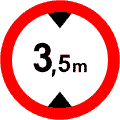
2. Sign B-16 "no entry for vehicles higher than ...... m" means a prohibition on the movement of vehicles whose height (including the load) is greater than the value given on the sign.
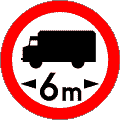
3. Sign B-17 "no entry for vehicles longer than ...... m" means a prohibition on the movement of vehicles or combinations of vehicles whose length (including the load) is greater than the value given on the sign.
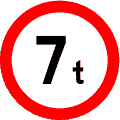
4. Sign B-18 "no entry for vehicles with an actual gross weight over ..... t" means a prohibition on the movement of vehicles whose actual gross weight is greater than the value given on the sign; in the case of a combination of vehicles, the prohibition applies to their combined weight.
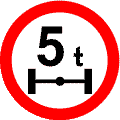
5. Sign B-19 "no entry for vehicles with a single driving axle load over ..... t" means a prohibition on the movement of vehicles whose single driving axle load is greater than the permissible load corresponding to the weight given on the sign; in the case of a group of axles, the load of none of the component axles may correspond to a weight greater than 80% of the weight given on the sign.
6. Where the value 8 t or 10 t is given on sign B-19, this means a permissible single driving axle load corresponding to a weight of up to 8 t or 10 t and, for a group of axles, a correspondingly greater weight, in accordance with the provisions laying down the technical conditions for vehicles used on roads.
7. Sign B-19 does not apply to:
1) buses;
2) vehicles taking part in rescue operations and in the direct removal of the effects of natural disasters;
3) vehicles of public road administrators and of entities performing road maintenance duties of the road administrator on its behalf;
4) vehicles of the Police, the Road Transport Inspectorate, the State Protection Service, the Internal Security Agency, the Foreign Intelligence Agency, the Military Counterintelligence Service, the Military Intelligence Service, the Central Anti-Corruption Bureau, the Border Guard, the Prison Service, the National Revenue Administration used by the Customs and Fiscal Service, and of fire protection units, performing the tasks of those services or entities;
5) vehicles of the Armed Forces of the Republic of Poland and of allied states;
6) vehicles of the State Water Holding Polish Waters (Państwowe Gospodarstwo Wodne Wody Polskie) and of entities performing on its behalf tasks arising from the Act of 20 July 2017 - Water Law (Dz. U. of 2020, items 310, 284, 695, 782, 875 and 1378);
7) vehicles delivering to hospitals the equipment and supplies necessary to combat infections and infectious diseases during a state of epidemic threat or a state of epidemic declared on the basis of the Act of 5 December 2008 on preventing and combating infections and infectious diseases in humans (Dz. U. of 2020, items 1845, 2112 and 2401, and of 2021, items 159, 180 and 255).
§ 21.

1) a prohibition on entering the intersection without stopping before the road with right of way;
2) an obligation to give way to drivers travelling on that road.
2. The stop must be made at the place designated for that purpose and, where there is none, at a place where the driver can make sure that he will not obstruct traffic on the road with right of way.
3. Sign B-20 placed within an intersection applies only to the nearest carriageway before which it has been placed.
4. The provisions of paragraphs 1-3 apply accordingly to sign B-20 placed before a tram track or at other places where directions of traffic cross.
5. A plate T-6c or T-6d placed beneath sign B-20 indicates the actual course of the road with right of way through the intersection.
§ 22.
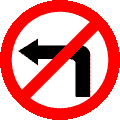
1. The signs: prohibit turning in the direction shown on the sign; sign B-21 additionally prohibits making a U-turn.
1) B-21 "no left turn",
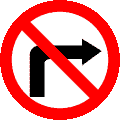
2) B-22 "no right turn"
2. The prohibitions expressed by signs B-21 and B-22 apply at the nearest intersection, subject to paragraph 3.
3. Signs B-21 and B-22 placed within an intersection apply only to the nearest carriageway before which they have been placed.
4. A plate with the inscription "Does not apply to" placed beneath sign B-21 or B-22, together with the symbol of a vehicle or an expression specifying a vehicle, indicates that the prohibition does not apply to the vehicle specified on the plate.


§ 23.
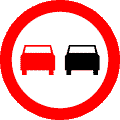
1. Sign B-25 "no overtaking" prohibits drivers of motor vehicles from overtaking multi-track motor vehicles.
2. A plate placed beneath sign B-25: indicates that the prohibition on overtaking applies to the driver of the vehicle whose symbol appears on the plate.
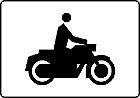
1) T-23a - motorcycle,
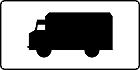
2) T-23b - lorry, special-purpose vehicle, vehicle used for special purposes, with a maximum permissible weight exceeding 3.5 t, and road tractor,
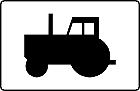
3) T-23c - agricultural tractor and slow-moving vehicle,
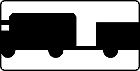
4) T-23d - motor vehicle with a trailer, except vehicles with a single-axle trailer or a semi-trailer,
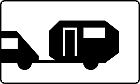
5) T-23e - vehicle with a caravan trailer,
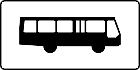
6) T-23f "bus",
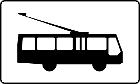
7) T-23g - trolleybus,
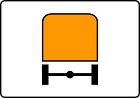
8) T-23h - vehicle carrying dangerous goods specified in § 19(2),
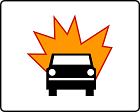
9) T-23i - vehicle carrying explosive or flammable goods specified in § 19(1),
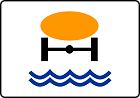
10) T-23j - vehicle carrying goods liable to contaminate water, specified in § 19(3),
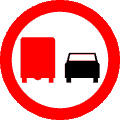
3. Sign B-26 "no overtaking by lorries" prohibits the overtaking of multi-track motor vehicles by a driver of:
1) a lorry with a maximum permissible weight exceeding 3.5 t;
2) a road tractor;
3) a special-purpose vehicle or a vehicle used for special purposes - with a maximum permissible weight exceeding 3.5 t.
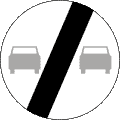
4. Sign B-27 "end of no overtaking" means the end of the prohibition expressed by sign B-25.
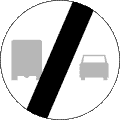
5. Sign B-28 "end of no overtaking by lorries" means the end of the prohibition expressed by sign B-26.
§ 24.
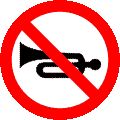
1. Sign B-29 "use of audible warning signals prohibited" prohibits the use of such signals unless it is necessary in order to warn of an immediate threat to traffic safety.

2. Sign B-30 "end of the prohibition on using audible warning signals" means the end of the prohibition expressed by sign B-29.
§ 25.

Sign B-31 "priority for oncoming traffic" prohibits road users from driving or walking onto a narrowed section of carriageway if this would force drivers who are on that section or approaching it from the opposite direction to stop.
§ 26.
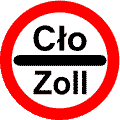
1. Sign B-32 "stop - customs control" means an obligation to stop. Instead of the inscription "Cło-Zoll", the sign may bear the inscriptions "Border control", "Barrier out of order", "Signals out of order", "Entry onto the ferry", "Road check" or "Toll collection" - according to the reason for stopping.
2. The stop must be made at the place designated for that purpose and, where no such place is designated, before the sign. Traffic may continue with the consent of an authorised person or after a signal permitting movement has been given.
§ 27.
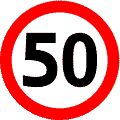
1. Sign B-33 "speed limit" means a prohibition on exceeding the speed given on the sign as a number of kilometres per hour. The speed limit given on the sign applies, subject to paragraph 4 and § 32, up to the place where:
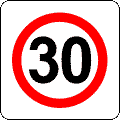
1) another speed limit is introduced by sign B-33 or B-43;
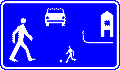
2) sign D-40 marking the beginning of a residential zone is placed;
3) the signs marking, respectively, the beginning or the end of a built-up area, referred to in § 58(3) and in § 114(1), points 1 and 2, are placed.
2. A plate placed beneath sign B-33, referred to in § 23(2), indicates that the speed limit applies to the driver of the vehicle whose symbol appears on the plate.
3. Sign B-33 specifying a speed limit higher than 50 km/h and placed in a built-up area applies to passenger cars, motorcycles and lorries with a maximum permissible weight not exceeding 3.5 t, with the exception of:
1) a vehicle carrying dangerous goods;
2) a vehicle with a device projecting more than 1.5 m forward from the driver's seat, referred to in Art. 20(6), point 2 of the Act;
3) a vehicle towing a motor vehicle, referred to in Art. 31(1), point 1 of the Act;
4) a motorcycle carrying a child under 7 years of age, referred to in Art. 20(6), point 3 of the Act;
5) a lorry carrying persons outside the driver's cab, referred to in Art. 63(2), point 4 of the Act.
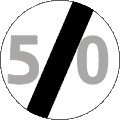
4. Sign B-34 "end of speed limit" cancels the speed limit introduced by sign B-33.
§ 28.

1. Sign B-35 "no parking" means a prohibition on parking a vehicle; a permitted period of immobilisation of the vehicle longer than one minute is indicated by an inscription on the sign or on a plate placed beneath it.

3. The prohibition expressed by sign B-35 or B-36:
1) applies to the side of the road on which the sign is placed, except at places where parking or stopping is permitted by means of a sign;
2) also applies to columns of pedestrians and to riders and drovers;
3) does not apply to vehicles immobilised because of traffic conditions or traffic rules.
4. The prohibition expressed by sign B-36 applies, subject to § 32(2), until cancelled or up to the place where sign B-35 is placed.
5. A plate T-24 placed beneath sign B-35 or B-36 indicates that a vehicle left at a place where the prohibition expressed by that sign applies will be removed from the road at the owner's expense.
6. The signs: mean a prohibition on parking vehicles on odd-numbered or even-numbered days of the month, respectively; the prohibition does not apply between 21:00 and 24:00; the provisions of paragraphs 1 and 3-5 apply accordingly to these signs.
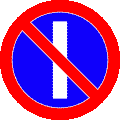
1) B-37 "no parking on odd-numbered days",
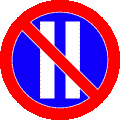
2) B-38 "no parking on even-numbered days"
7. Plates placed beneath sign B-35, B-36, B-37 or B-38 indicate:

1) T-25a - the beginning of the prohibition expressed by the sign;
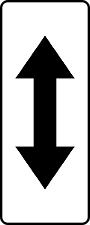
2) T-25b - the continuation of the prohibition expressed by the sign;
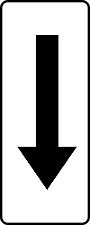
3) T-25c - the cancellation of the prohibition expressed by the sign.
8. Sign B-35, B-36, B-37 or B-38 together with plate T-26, placed in a square parallel to the edge of the carriageway, means that the prohibition expressed by that sign applies to the side of the square along which it has been placed.
§ 29.
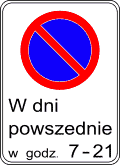
1. Sign B-39 "restricted parking zone" marks the entry into a zone in which parking is prohibited on all roads; a permitted period of immobilisation of the vehicle longer than one minute is indicated by an inscription on the sign.
2. Sign B-39 does not apply to:
1) a public transport vehicle stopping at the place designated for it;
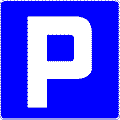
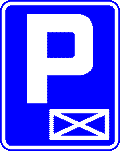

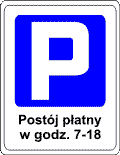
2) a vehicle stopping at a place marked by sign D-18, D-18a, D-18b or D-44;
3) a vehicle immobilised because of traffic conditions or traffic rules;
4) a school bus.

§ 30.

Sign B-41 "no pedestrians" means a prohibition on pedestrian traffic on the side of the road on which the sign is placed.
§ 31.
1. Sign B-43 "speed limit zone" marks the entry into a zone in which it is prohibited to exceed the speed given on the sign as a number of kilometres per hour.
2. Sign B-43 specifying a speed limit lower than or equal to 30 km/h additionally means that the devices and layouts placed in the zone to enforce slow driving need not be marked with warning signs.

§ 32.

1. Sign B-42 "end of prohibitions" cancels the prohibitions expressed by signs B-23, B-25, B-26, B-29 and B-33.
2. Where a prohibition expressed by signs B-25, B-26, B-29, B-33, B-35, B-36, B-37 and B-38 has not previously been cancelled by a sign marking the end of the prohibition, it applies up to the nearest intersection; this does not apply to an intersection on a dual carriageway road at which the entry of the crossing road is only on the left-hand side and has no connection with the right-hand carriageway.
§ 33.
1. A driver of a vehicle carrying out cleaning, repair or upgrading works on the road need not comply with the prohibitions expressed by signs B-1, B-3, B-5, B-6 and B-7 while carrying out works on the road or driving to the place where they are carried out within an area or on a road covered by the prohibition, provided that yellow flashing signals are used and particular care is exercised.
2. The persons referred to in Art. 8(1) and (2) of the Act may, provided that particular care is exercised, not comply with the prohibitions expressed by signs B-1, B-3, B-3a, B-4, B-10, B-35, B-37, B-38 and B-39, subject to paragraph 3.
3. A plate with the inscription "Also applies to" and the symbol of a disabled person, specified on plate T-29, placed beneath the signs referred to in paragraph 2, indicates that those signs also apply to the persons referred to in Art. 8(1) and (2) of the Act.